

Automotive and components
The automotive transition is emptying order books built over thirty years
Many Italian component suppliers built their revenue on a few large automotive groups. With the change in powertrains and platforms some codes disappear and others go to different suppliers. Diversifying clients or industries is no longer a strategic choice, it is a deadline.
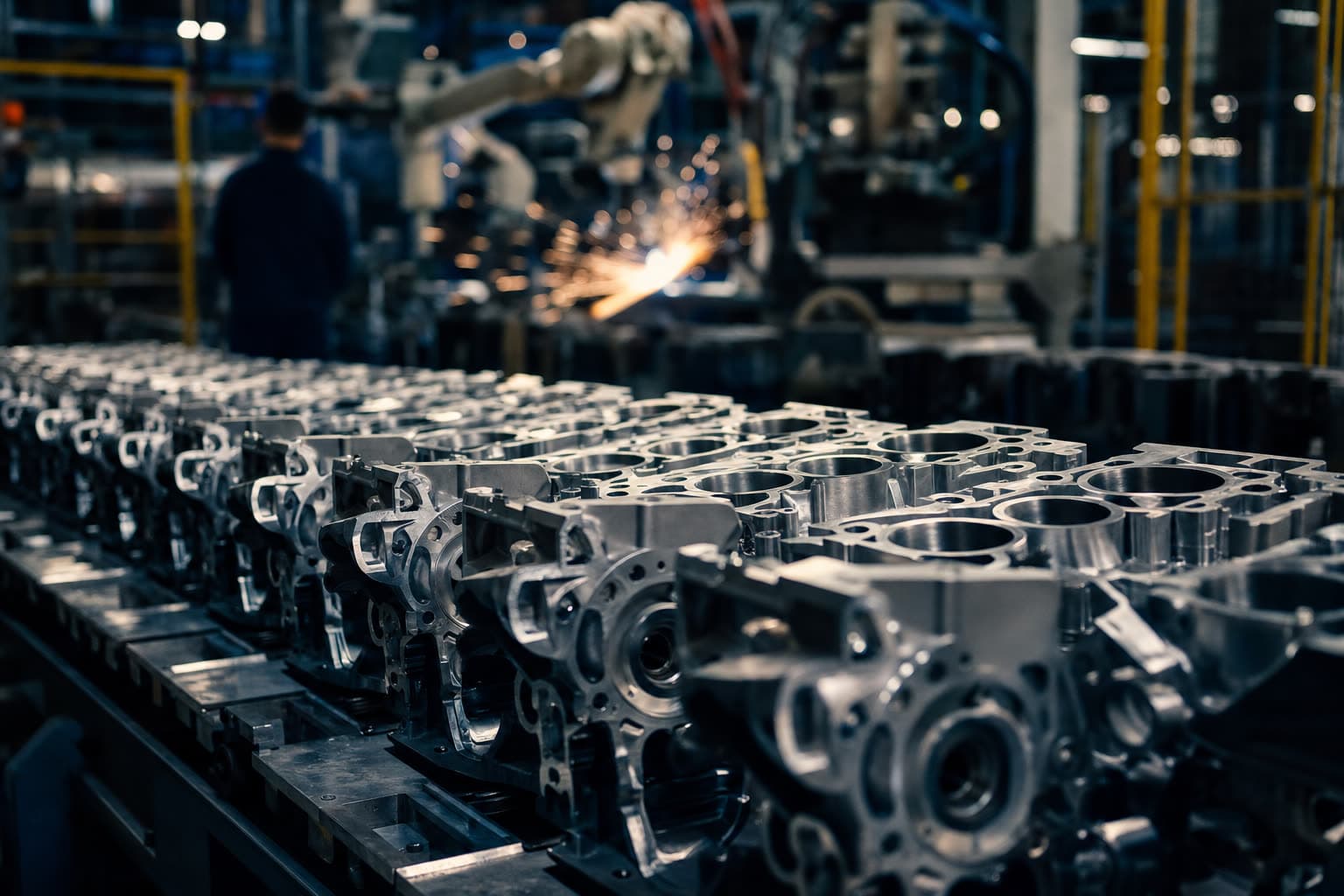
The starting point
The challenges we meet most often
Challenges 1
Dependence on a few manufacturers
When a Tier 1 or a carmaker moves a platform, the volumes move with it and there is no way to negotiate.
Challenges 2
Components tied to the combustion engine
Those who make parts for traditional engines and transmissions see future volumes shrinking. The same processes are needed elsewhere, but nobody knows it.
Challenges 3
Heavy qualifications and audits
IATF 16949, PPAP, process audits. Getting into a new client takes time, so it pays to start before you need it.
The method in the industry
How we work in this industry
We work on two tracks. The first stays in automotive: Tier 1 and Tier 2 suppliers developing new platforms and looking for suppliers for specific component families. The second takes your processes into adjacent industries, such as agricultural machinery, industrial vehicles and rail, where automotive discipline is a strength. The message doesn't introduce the company, it names the process and the quality standard, and reaches supplier development and engineering by email and LinkedIn.
Who we talk to
Supplier Development or Purchasing Manager
Looks for new suppliers for component families. Assesses production capacity, certified quality and financial soundness.
Product engineering manager
Decides whether your component meets the specifications. Is often the one who proposes a new supplier to purchasing.
Purchasing Director at companies outside automotive
Agricultural machinery, earthmoving, industrial vehicles, rail. They value a supplier used to automotive standards, which for them are a guarantee.
The objection we hear most often
«In automotive, suppliers are chosen through tenders and audits; commercial contact counts for little.»
Only those already on the invited suppliers list take part in tenders. The contact is needed to get onto that list, and it is decided by someone in supplier development who has to be reached before the tender starts. In industries close to automotive, the process is much leaner, and there the first conversation weighs more.
Recommended services
The channels we use here
Account Based Marketing
Surgical targeting on a named list of companies you want to win. Multi-decision-maker, multichannel, zero waste.
Discover the service →
Multichannel Outbound
Three channels coordinated on the same person. A name already seen on LinkedIn makes the email expected, and the phone call comes when there is something to say. We multiply the opportunities, not the insistence.
Discover the service →
Frequently asked questions
Questions about the industry
How can an automotive supplier diversify into other industries?
Starting from the processes, not the products. Moulding, machining, treatments and assemblies that serve automotive also serve agriculture, industrial vehicles and rail. We build a list of manufacturers in those sectors and contact whoever develops new suppliers.
Does outbound work towards Tier 1 suppliers and car manufacturers?
It works if you already have the certifications and a clear offer on a family of components. With the large groups the timelines stay long and the contact has to be made with the right commodity person. With Tier 2 suppliers and smaller manufacturers the response is faster.
Does it make sense to look for clients in Germany for components?
Yes, the German supply chain buys a lot of Italian components. You need someone in the company who handles the deal in English or German. We write the messages in the recipient’s language.

Your market is in the industry automotive and components? Let's talk.
In the Feasibility Study we tell you honestly whether it makes sense to get started in your industry, and how.